Genre: Strategy
Genre:
Puzzle
Development time: 3 weeks
Development time:
4 months
December 2023
March
2025
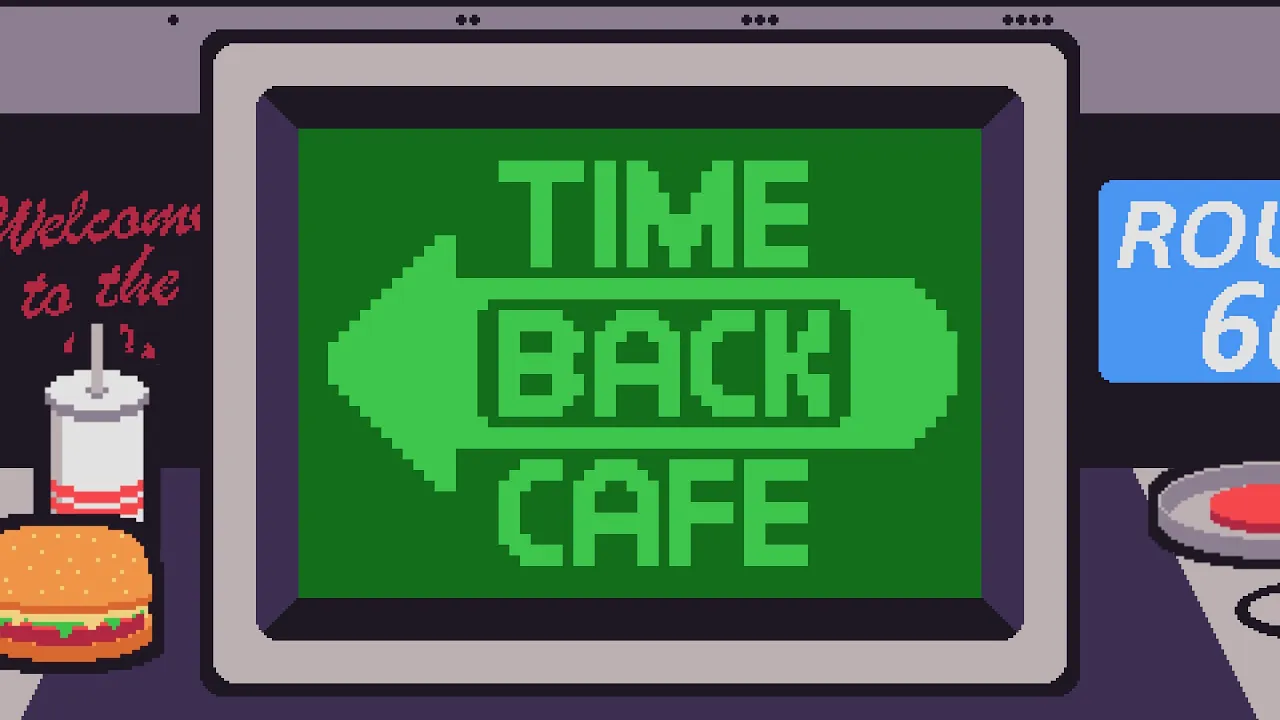
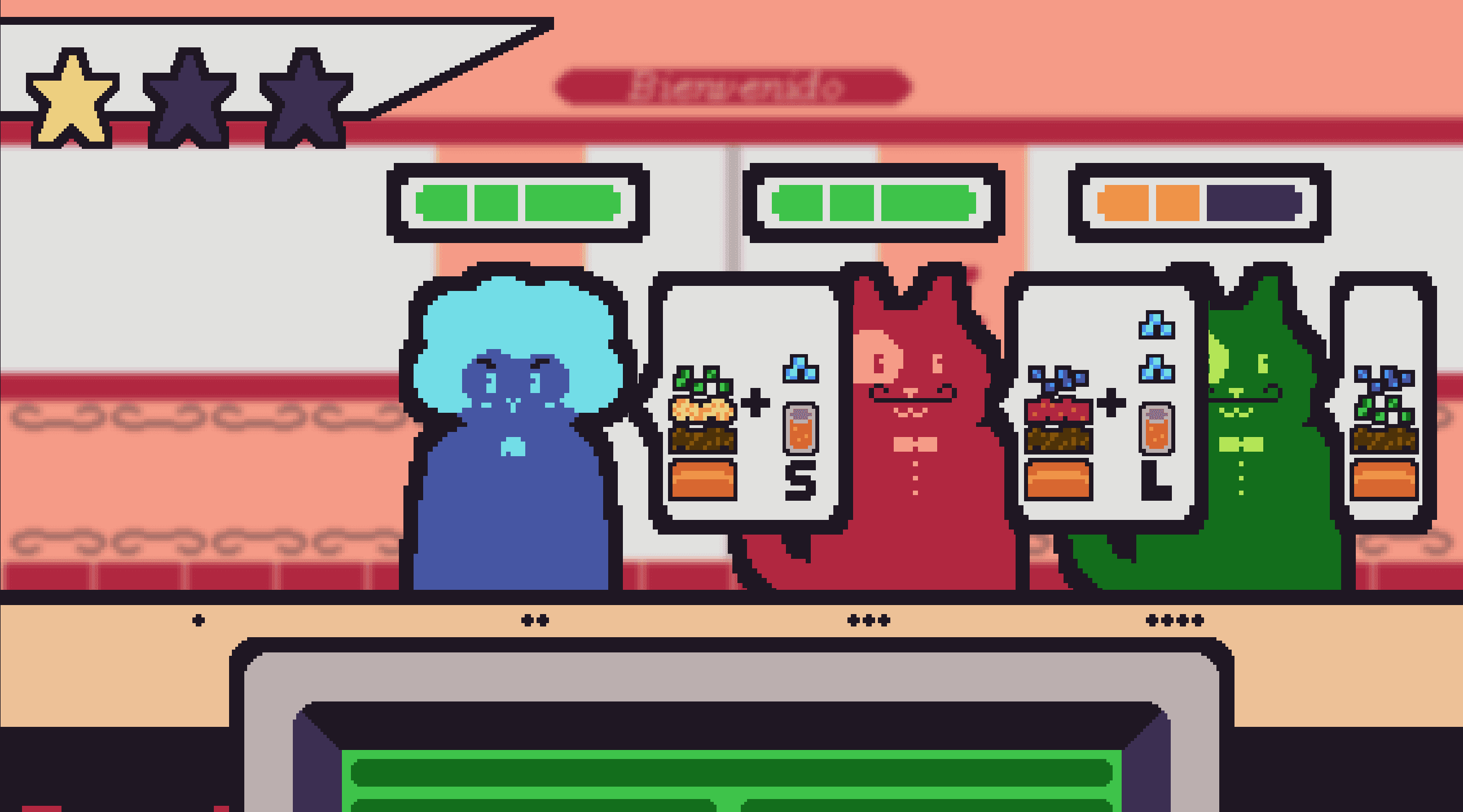
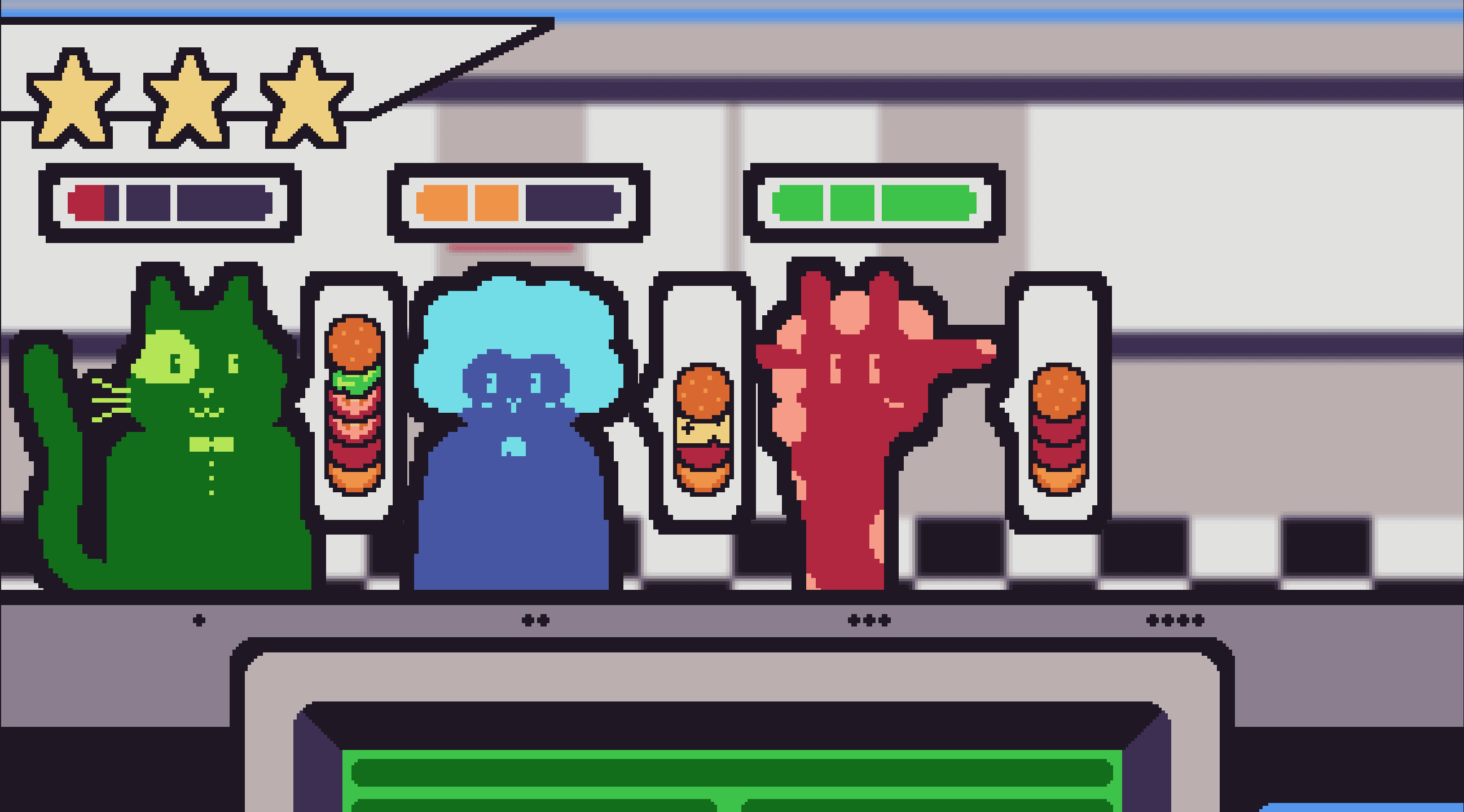
Time Back Café is a unique cooking simulator where you operate a kitches through entering commands on you computer. Use the latest tech from the 80s to take orders from customers and assemble them step by step.
Time Back Café is a unique cooking simulator where you operate a kitches through entering commands on you computer. Use the latest tech from the 80s to take orders from customers and assemble them step by step.
Time Back Café is a unique cooking simulator where you operate a kitches through entering commands on you computer. Use the latest tech from the 80s to take orders from customers and assemble them step by step.
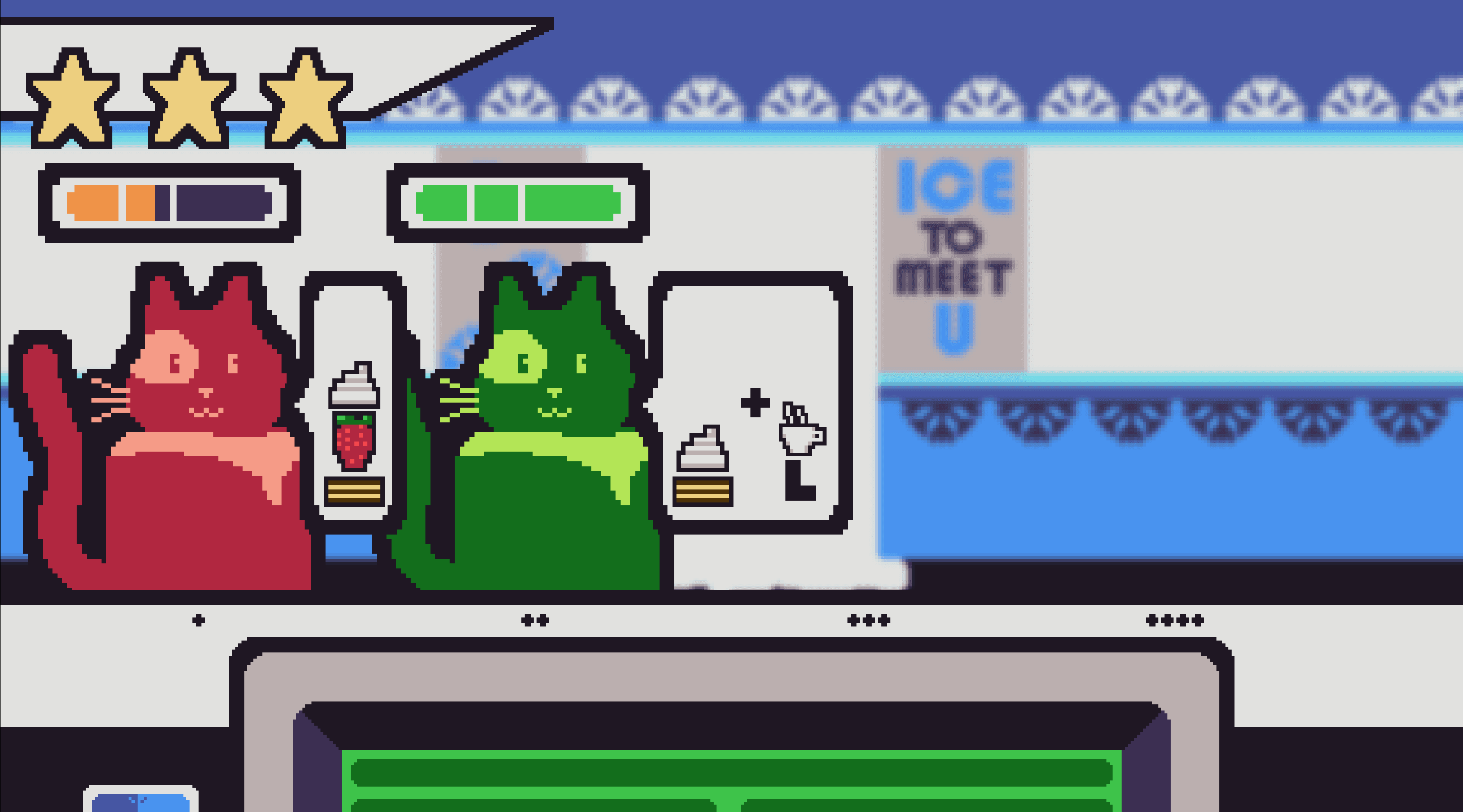
Cook patties, fill up sodas, carefully pour beer and bake cakes. Multitask your way through different restaurants, purchase supplies and upgrade your kitches for maximum efficiency.
Cook patties, fill up sodas, carefully pour beer and bake cakes. Multitask your way through different restaurants, purchase supplies and upgrade your kitches for maximum efficiency.
Cook patties, fill up sodas, carefully pour beer and bake cakes. Multitask your way through different restaurants, purchase supplies and upgrade your kitches for maximum efficiency.
Our Café offers:
4+ Restaurants with different menus and mechanics
An Endless Mode for all employees
Easy Mode for those who have never stepped into a kitchen before
Never-ending stress during rush hour
Our Café offers:
4+ Restaurants with different menus and mechanics
An Endless Mode for all employees
Easy Mode for those who have never stepped into a kitchen before
Never-ending stress during rush hour
Our Café offers:
4+ Restaurants with different menus and mechanics
An Endless Mode for all employees
Easy Mode for those who have never stepped into a kitchen before
Never-ending stress during rush hour

Gallery
Gallery
Highlights
Highlights
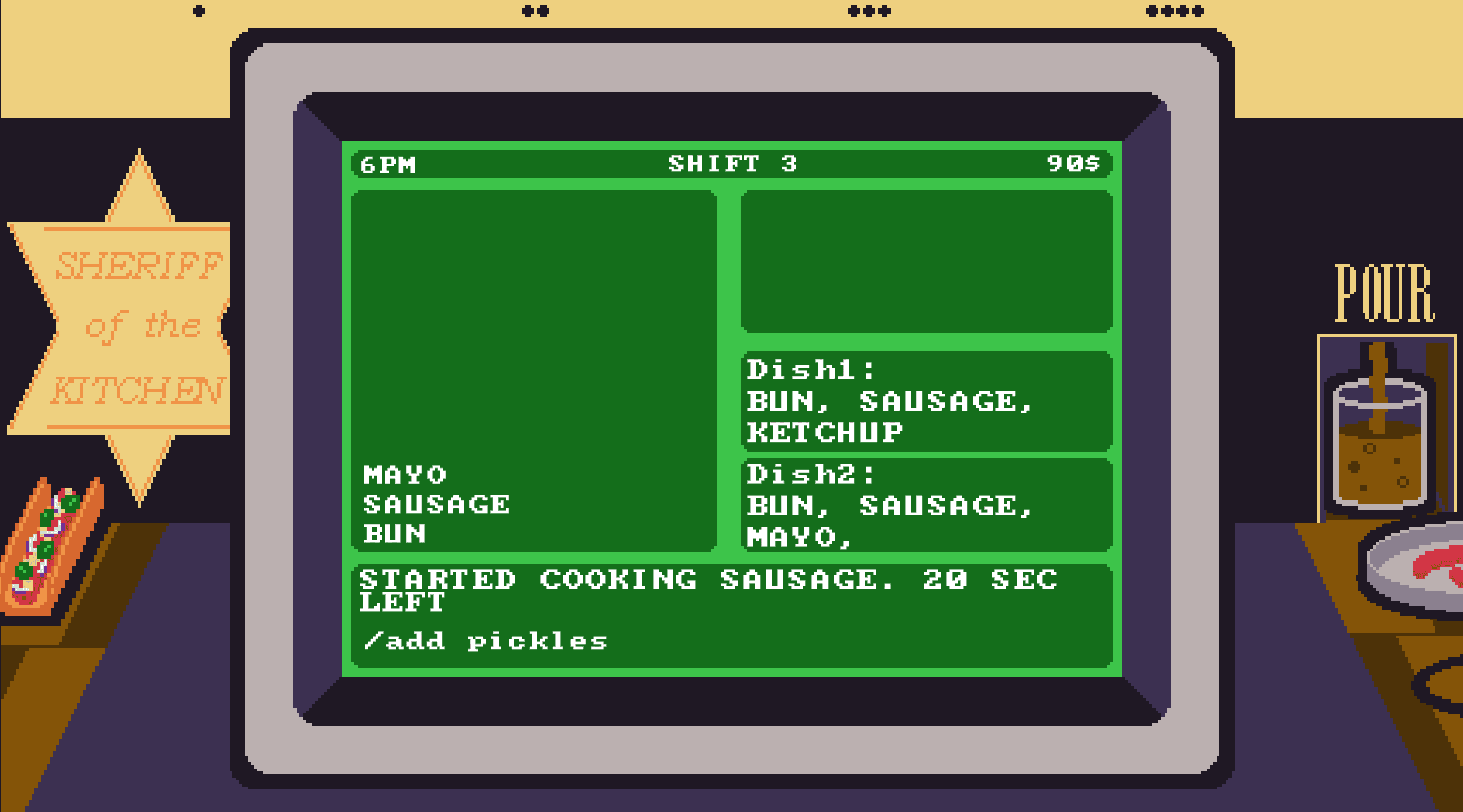
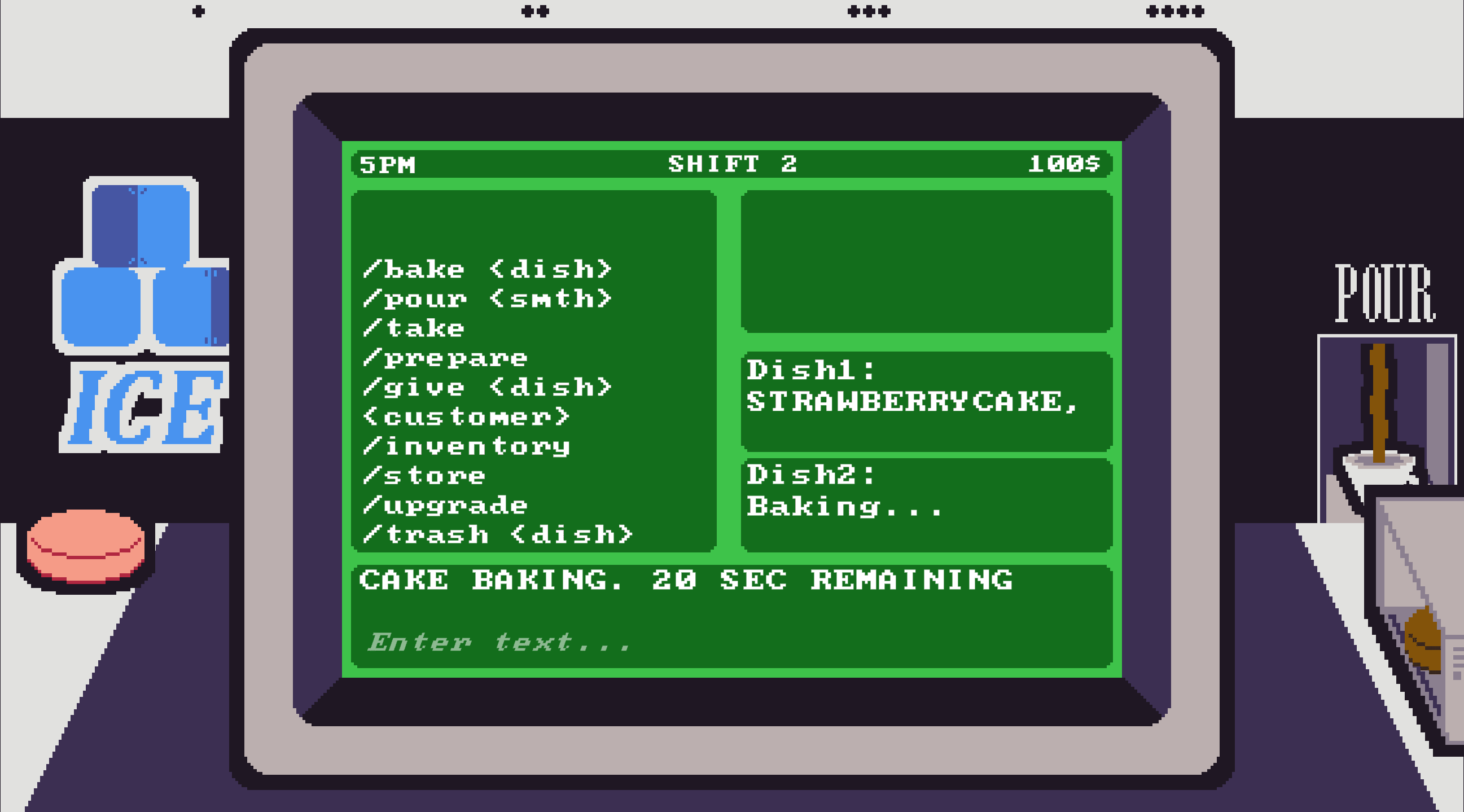
Input-based cooking station with 15+ commands and 30+ ingredients.
Input-based cooking station with
15+ commands and 30+ ingredients.
Performance-based progression.
Endless mode for replayabiltiy.
Players learn and deepen new mechanics every shift.
Players learn and deepen new
mechanics every shift.
Players learn and deepen new mechanics every shift.
Player-made typos are reinterperated into correct inputs.
Player-made typos are reinterperated
into correct inputs.
Player-made typos are reinterperated into correct inputs.
Built in three weeks for a game jam.
Development Journey
Development Journey
My roles throughout developement: Gameplay Developer, Artist
The Idea
The Idea
Time Back Café was designed for the Secret Santa Jam 2023 where participants write a letter to each other at the beginning of December, describing a small game that which should be delivered to you on Christmas Eve. I received a letter wishing for a game that combines animals with cooking and computers. After brainstorming, I had the idea of designing a cooking game in which you need to type out commands on a computer to cook dishes that would be served to dining animals. The player would need to prepare ingredients, such as cooking patties, and assemble dishes by stacking ingredients on top of each other. Customers would leave tips based on how quickly they were served which in turn would be used to order ingredients and upgrade kitchen equipment. This adds a sense of progression and urgency to the gameplay. The player progress over the course of the game through different kitchens, each having different recipes and computer commands to keep the gameplay loop fresh.
Time Back Café was designed for the Secret Santa Jam 2023 where participants write a letter to each other at the beginning of December, describing a small game that which should be delivered to you on Christmas Eve. I received a letter wishing for a game that combines animals with cooking and computers. After brainstorming, I had the idea of designing a cooking game in which you need to type out commands on a computer to cook dishes that would be served to dining animals. The player would need to prepare ingredients, such as cooking patties, and assemble dishes by stacking ingredients on top of each other. Customers would leave tips based on how quickly they were served which in turn would be used to order ingredients and upgrade kitchen equipment. This adds a sense of progression and urgency to the gameplay. The player progress over the course of the game through different kitchens, each having different recipes and computer commands to keep the gameplay loop fresh.
Time Back Café was designed for the Secret Santa Jam 2023 where participants write a letter to each other at the beginning of December, describing a small game that which should be delivered to you on Christmas Eve. I received a letter wishing for a game that combines animals with cooking and computers. After brainstorming, I had the idea of designing a cooking game in which you need to type out commands on a computer to cook dishes that would be served to dining animals. The player would need to prepare ingredients, such as cooking patties, and assemble dishes by stacking ingredients on top of each other. Customers would leave tips based on how quickly they were served which in turn would be used to order ingredients and upgrade kitchen equipment. This adds a sense of progression and urgency to the gameplay. The player progress over the course of the game through different kitchens, each having different recipes and computer commands to keep the gameplay loop fresh.

Key Moments
Key Moments
The most complex task while developing was programming the text input system and the logic behind it. An input field captured phrases, which were defined via scriptable objects and would could trigger a variety of actions. This approach allowed for a flexible development, making it easy to exchange or add commands on the fly. Even the recipes of dishes could be updated simply through reordering some scriptable objects. Behind the computer lies a singleton, which was responsible for keeping track every ingredient and their quantity. It could execute methods for preparing them, restocking them and buying upgrades. The singleton stands in constant communication with other parts of the kitchen, updating their status on the screen for the player to see. This system allowed me to rapidly add more kitchens with unique quirks and functions. Designing this modular system with scriptable objects showed me how powerful and practical they are for developing games.
The most complex task while developing was programming the text input system and the logic behind it. An input field captured phrases, which were defined via scriptable objects and would could trigger a variety of actions. This approach allowed for a flexible development, making it easy to exchange or add commands on the fly. Even the recipes of dishes could be updated simply through reordering some scriptable objects. Behind the computer lies a singleton, which was responsible for keeping track every ingredient and their quantity. It could execute methods for preparing them, restocking them and buying upgrades. The singleton stands in constant communication with other parts of the kitchen, updating their status on the screen for the player to see. This system allowed me to rapidly add more kitchens with unique quirks and functions. Designing this modular system with scriptable objects showed me how powerful and practical they are for developing games.
The most complex task while developing was programming the text input system and the logic behind it. An input field captured phrases, which were defined via scriptable objects and would could trigger a variety of actions. This approach allowed for a flexible development, making it easy to exchange or add commands on the fly. Even the recipes of dishes could be updated simply through reordering some scriptable objects. Behind the computer lies a singleton, which was responsible for keeping track every ingredient and their quantity. It could execute methods for preparing them, restocking them and buying upgrades. The singleton stands in constant communication with other parts of the kitchen, updating their status on the screen for the player to see. This system allowed me to rapidly add more kitchens with unique quirks and functions. Designing this modular system with scriptable objects showed me how powerful and practical they are for developing games.

Challenges & Solutions
Challenges & Solutions
An obvious challenge for any game jam participant is the time limit. I had about three weeks for this project, and I wanted to use this time to create the best version of Time Back Café possible. That meant creating systems quickly but still maintaining a decent quality. To combat this I created most system in a modular way, like the recipes and input commands. This approach helped me stay ahead of my timeline and ensured that I could cut any content in emergencies while still keeping the main system running. That meant that I could experiment with new features more freely knowing that I could scrap them at any time if they didn’t fit. In the end, this modular approach was the key into delivering a polished game within the time limits, which also taught me valuable lessons that I will carry into future games.
An obvious challenge for any game jam participant is the time limit. I had about three weeks for this project, and I wanted to use this time to create the best version of Time Back Café possible. That meant creating systems quickly but still maintaining a decent quality. To combat this I created most system in a modular way, like the recipes and input commands. This approach helped me stay ahead of my timeline and ensured that I could cut any content in emergencies while still keeping the main system running. That meant that I could experiment with new features more freely knowing that I could scrap them at any time if they didn’t fit. In the end, this modular approach was the key into delivering a polished game within the time limits, which also taught me valuable lessons that I will carry into future games.
An obvious challenge for any game jam participant is the time limit. I had about three weeks for this project, and I wanted to use this time to create the best version of Time Back Café possible. That meant creating systems quickly but still maintaining a decent quality. To combat this I created most system in a modular way, like the recipes and input commands. This approach helped me stay ahead of my timeline and ensured that I could cut any content in emergencies while still keeping the main system running. That meant that I could experiment with new features more freely knowing that I could scrap them at any time if they didn’t fit. In the end, this modular approach was the key into delivering a polished game within the time limits, which also taught me valuable lessons that I will carry into future games.