
Genre: Puzzle
Genre:
Puzzle
Development time: 4 months
Development time:
4 months
March 2025
March
2025
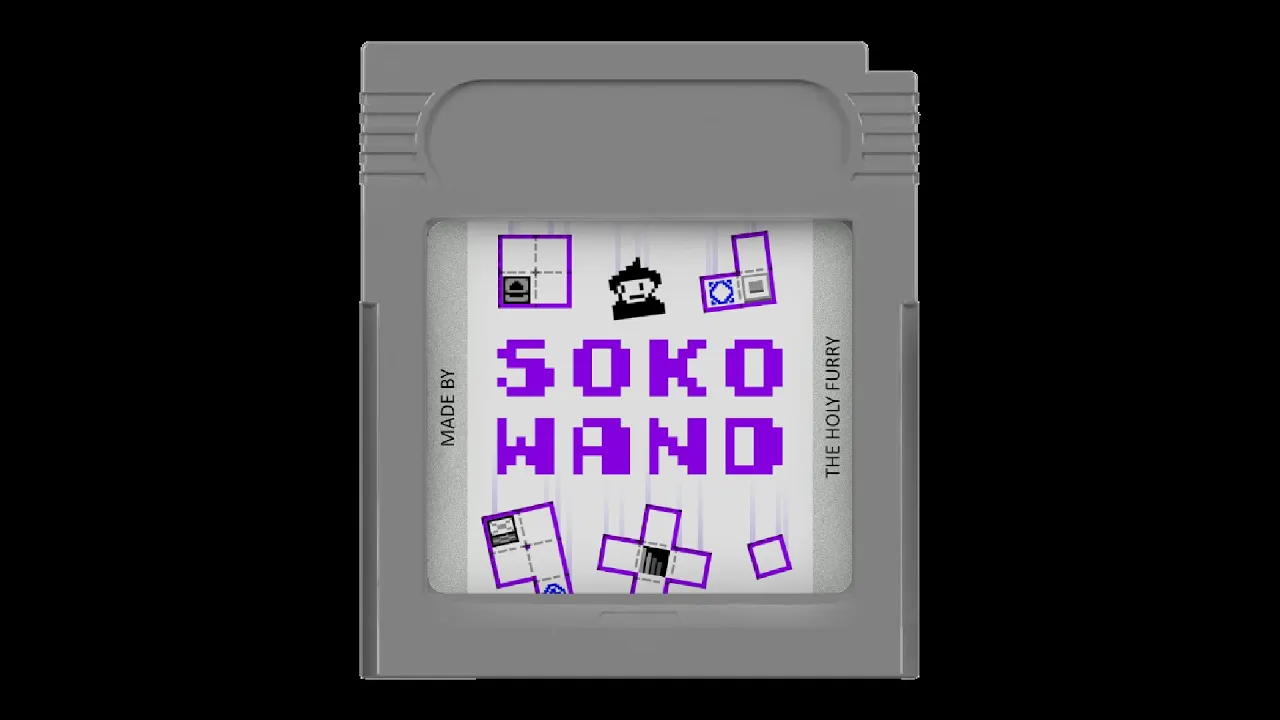
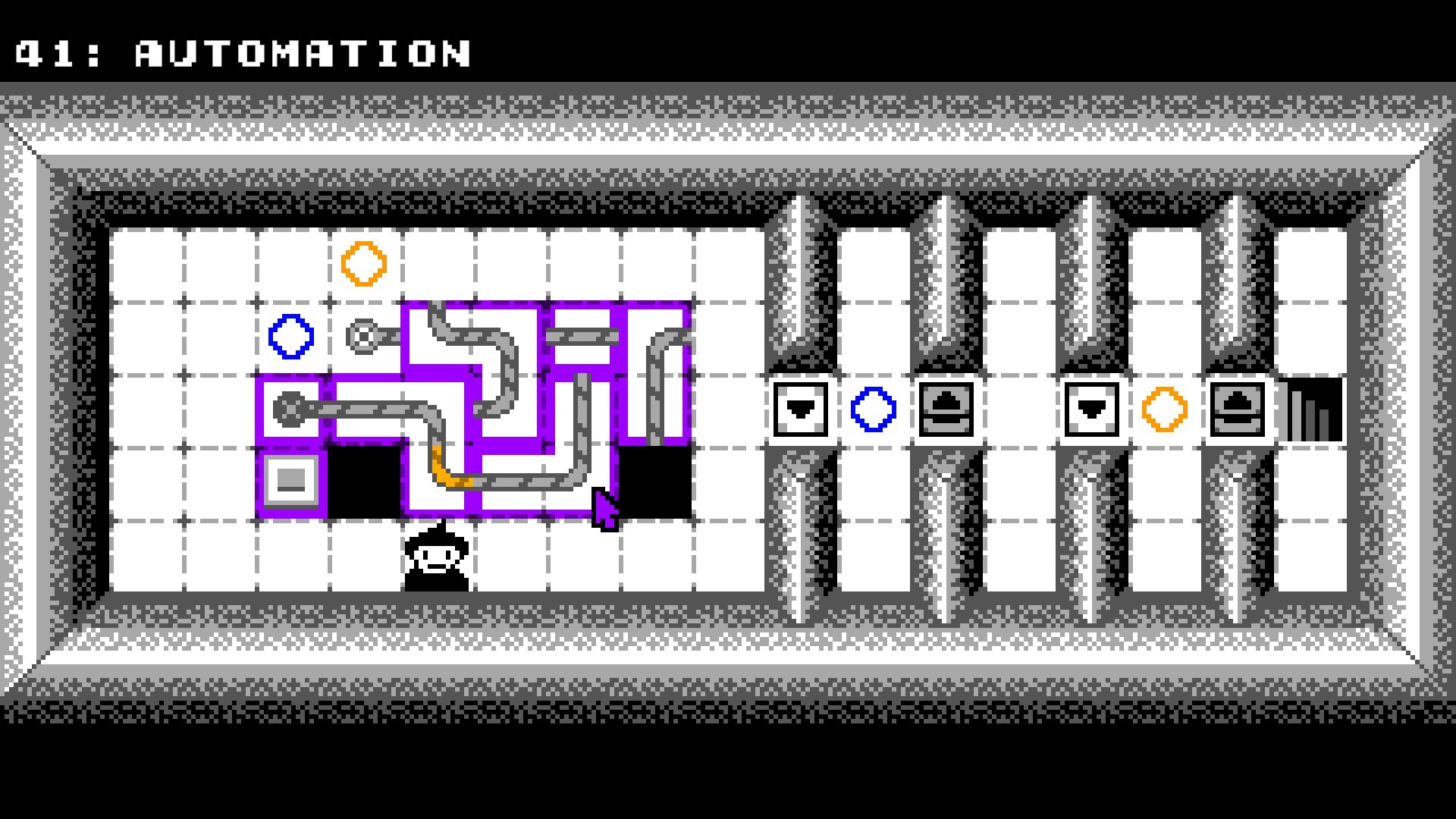
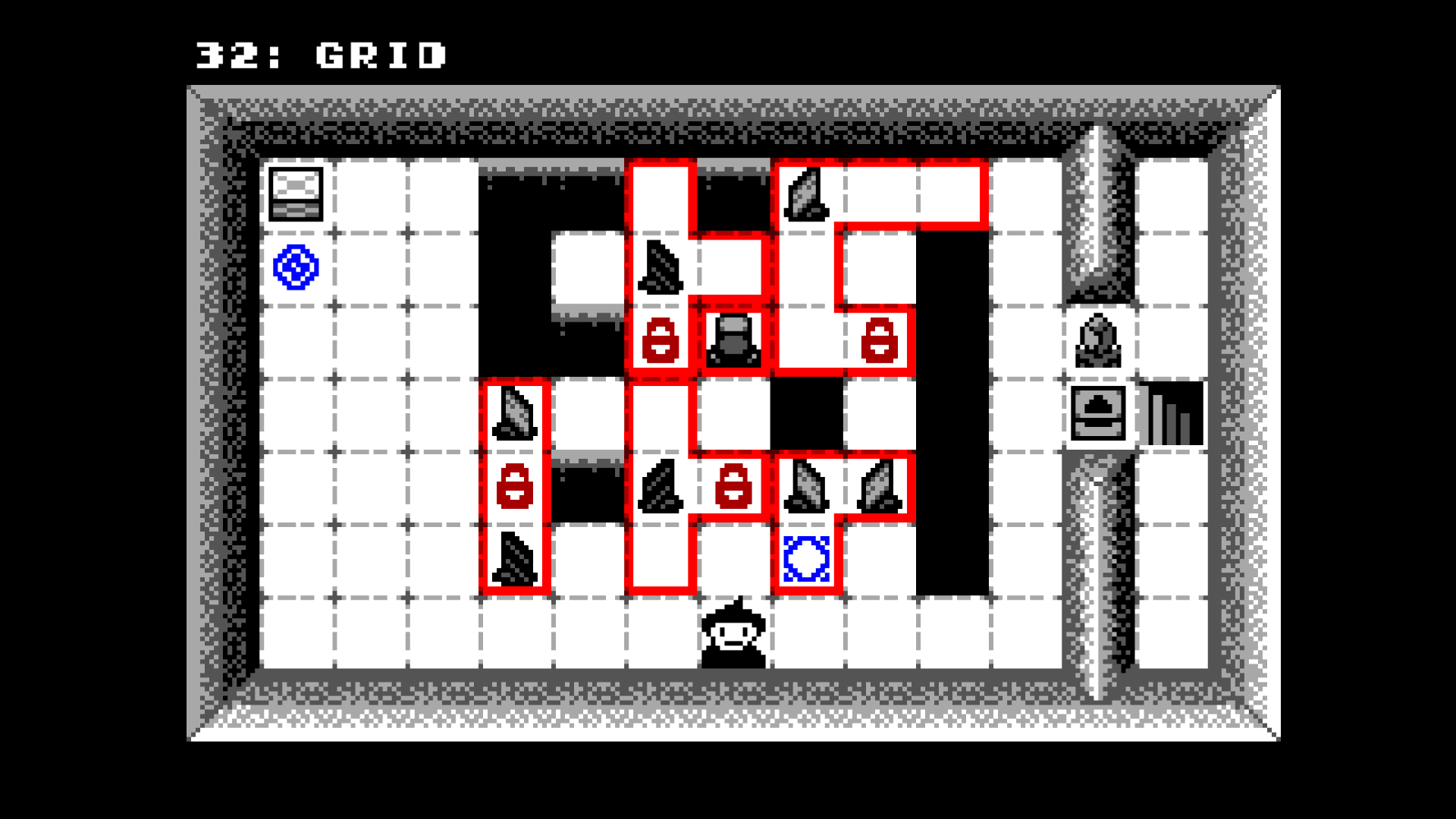
Sokowand is a top-down retro puzzle game that fuses classic sokoban-inspired puzzles with a magical floor that can be ripped out. Need to cross a gap? Use the floor next to you. Need a button for a door? Steal it from the last room! But don't be too quick, some floors are more important than they seem to appear.
Sokowand is a top-down retro puzzle game that fuses classic sokoban-inspired puzzles with a magical floor that can be ripped out. Need to cross a gap? Use the floor next to you. Need a button for a door? Steal it from the last room! But don't be too quick, some floors are more important than they seem to appear.
Sokowand is a top-down retro puzzle game that fuses classic sokoban-inspired puzzles with a magical floor that can be ripped out. Need to cross a gap? Use the floor next to you. Need a button for a door? Steal it from the last room! But don't be too quick, some floors are more important than they seem to appear.
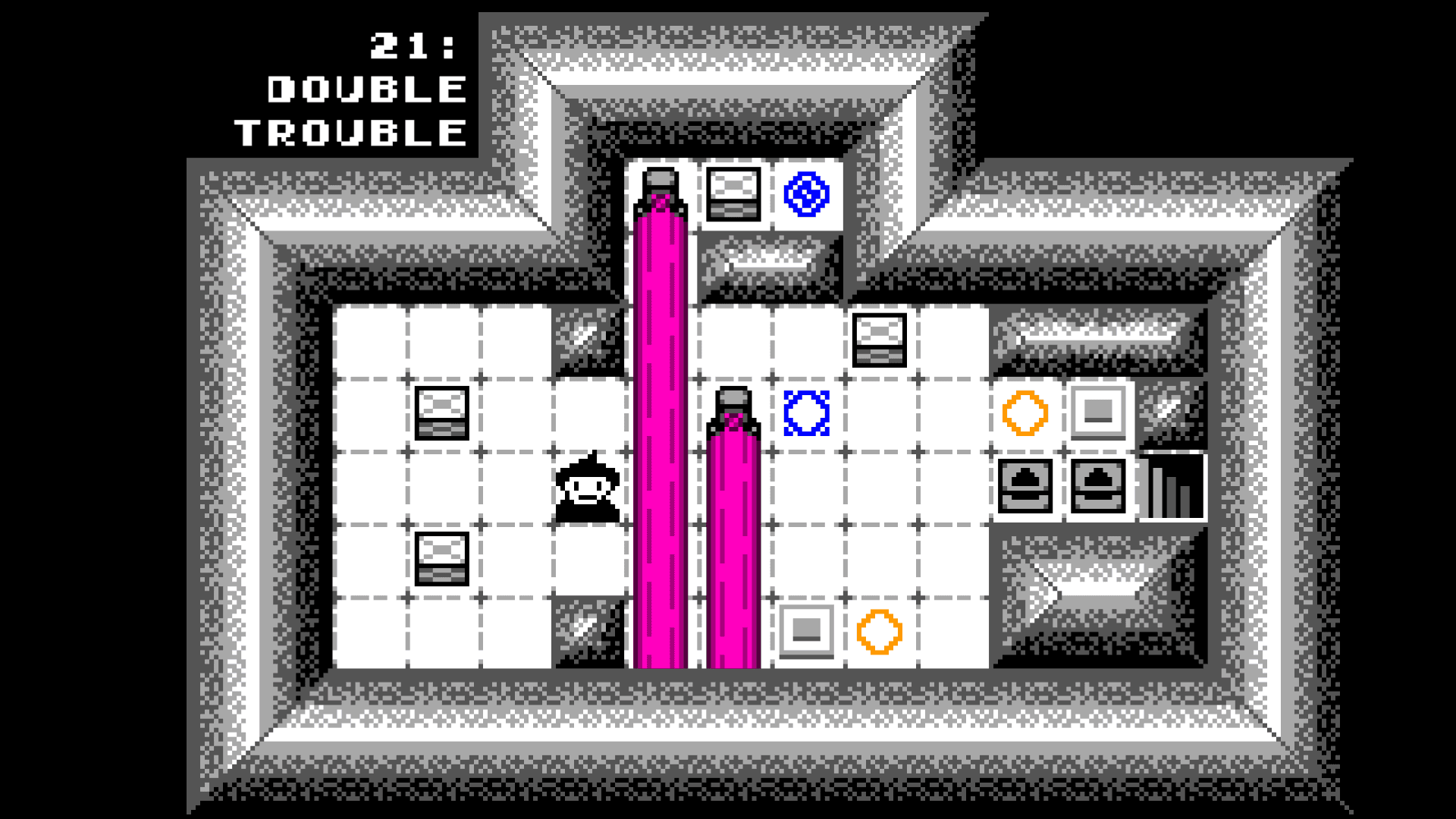
Reassemble each of the 40+ rooms and build your way block by block - or rather floor by floor - to the goal. Push boxes to open doors, manipulate signals, redirect laser by rotating mirrors and rewire entire floors full of electricity.
Reassemble each of the 40+ rooms and build your way block by block - or rather floor by floor - to the goal. Push boxes to open doors, manipulate signals, redirect laser by rotating mirrors and rewire entire floors full of electricity.
Reassemble each of the 40+ rooms and build your way block by block - or rather floor by floor - to the goal. Push boxes to open doors, manipulate signals, redirect laser by rotating mirrors and rewire entire floors full of electricity.
Sokowand contains:
A unique twist on a classic puzzle genre
45 Levels with an ever growing complexity
Nostalgia inspired artstyle and soundtrack
Hints for a more laid back experience
Sokowand contains:
A unique twist on a classic puzzle genre
45 Levels with an ever growing complexity
Nostalgia inspired artstyle and soundtrack
Hints for a more laid back experience
Sokowand contains:
A unique twist on a classic puzzle genre
45 Levels with an ever growing complexity
Nostalgia inspired artstyle and soundtrack
Hints for a more laid back experience


Gallery
Gallery
Gallery
Highlights
Highlights
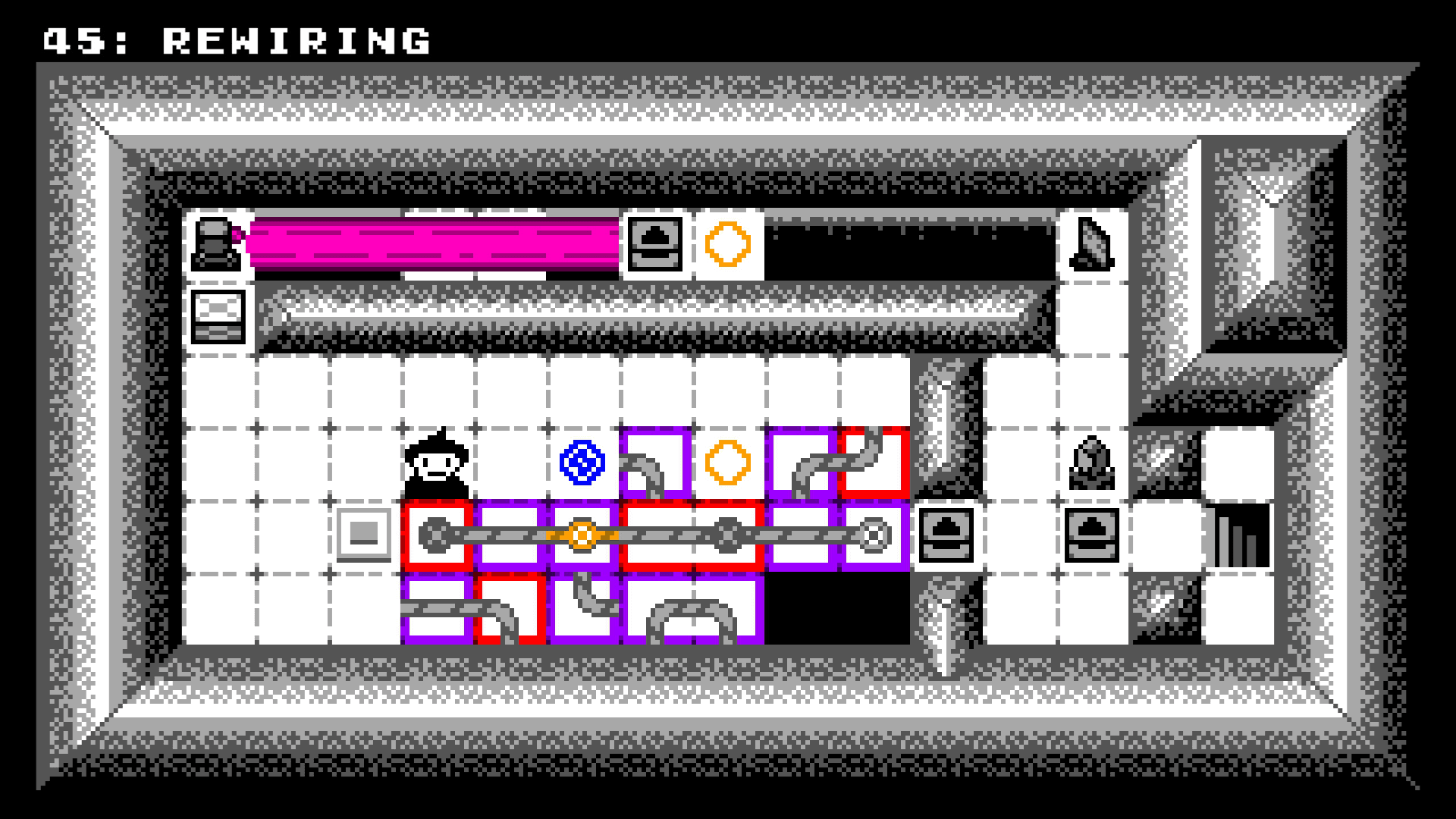
Multi-layered puzzle logic with buttons, signal, laser and circuits.
Multi-layered puzzle logic with buttons,
signal, laser and circuits.
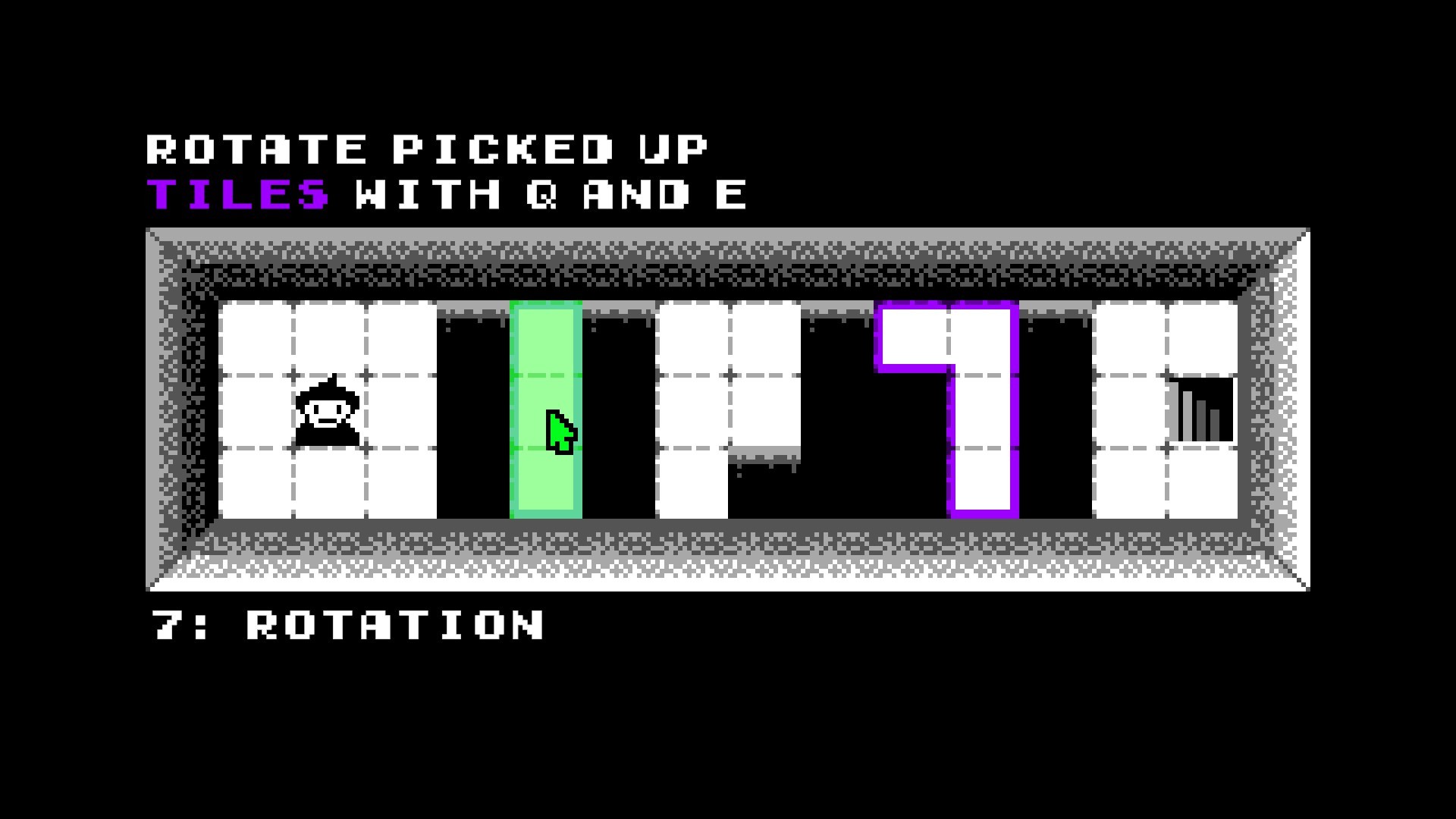
Dynamic floor-ripping system.
GB Color-inspired artstyle.
GB Color-inspired artstyle.
Players learn mechanics through experimentation, not through tutorials.
Players learn mechanics through experimentation,
not through tutorials.
Rewind systems that can handle multiple objects simultaneously.
Rewind systems that can handle
multiple objects simultaneously.
Built-in hint system.
Built-in hint system.
Editor tools that allow quick and easy level building.
Editor tools that allow quick
and easy level building.

Development Journey
Development Journey
My roles throughout developement: Gameplay Developer, Level Designer, Artist, Publisher
The Idea
The Idea
The idea for Sokowand started back in 2021 after playing multiple Sokoban games on the PICO-8 engine. I was fascinated by how simple game design and limitations could spark such interesting level design and I wanted to design something similar. The original idea allowed the player to rip out the floor and walls freely without limitation. It quickly turned out, during the puzzle design phase, that this approach would not work as intended, because it would grant the player too much freedom and wouldn’t allow for interesting puzzles.
The idea changed into allowing the player to rip out only certain designated floor tiles with the limitation that the player could carry only one floor at a time. Players should solve puzzles with mechanics like doors, switches, and runic symbols that could transfer power further if placed next to a button. These could be ripped out as well, if they were places on the designated floors, and be used in other parts of the puzzle. Recycling used parts would be a main focus of the puzzle design. Other mechanics like lasers, breakable glass, rotation-locked tiles and power cables would be introduced over time to increase the difficulty and complexity.
The idea for Sokowand started back in 2021 after playing multiple Sokoban games on the PICO-8 engine. I was fascinated by how simple game design and limitations could spark such interesting level design and I wanted to design something similar. The original idea allowed the player to rip out the floor and walls freely without limitation. It quickly turned out, during the puzzle design phase, that this approach would not work as intended, because it would grant the player too much freedom and wouldn’t allow for interesting puzzles.
The idea changed into allowing the player to rip out only certain designated floor tiles with the limitation that the player could carry only one floor at a time. Players should solve puzzles with mechanics like doors, switches, and runic symbols that could transfer power further if placed next to a button. These could be ripped out as well, if they were places on the designated floors, and be used in other parts of the puzzle. Recycling used parts would be a main focus of the puzzle design. Other mechanics like lasers, breakable glass, rotation-locked tiles and power cables would be introduced over time to increase the difficulty and complexity.
The idea for Sokowand started back in 2021 after playing multiple Sokoban games on the PICO-8 engine. I was fascinated by how simple game design and limitations could spark such interesting level design and I wanted to design something similar. The original idea allowed the player to rip out the floor and walls freely without limitation. It quickly turned out, during the puzzle design phase, that this approach would not work as intended, because it would grant the player too much freedom and wouldn’t allow for interesting puzzles.
The idea changed into allowing the player to rip out only certain designated floor tiles with the limitation that the player could carry only one floor at a time. Players should solve puzzles with mechanics like doors, switches, and runic symbols that could transfer power further if placed next to a button. These could be ripped out as well, if they were places on the designated floors, and be used in other parts of the puzzle. Recycling used parts would be a main focus of the puzzle design. Other mechanics like lasers, breakable glass, rotation-locked tiles and power cables would be introduced over time to increase the difficulty and complexity.
Key Moments
Key Moments
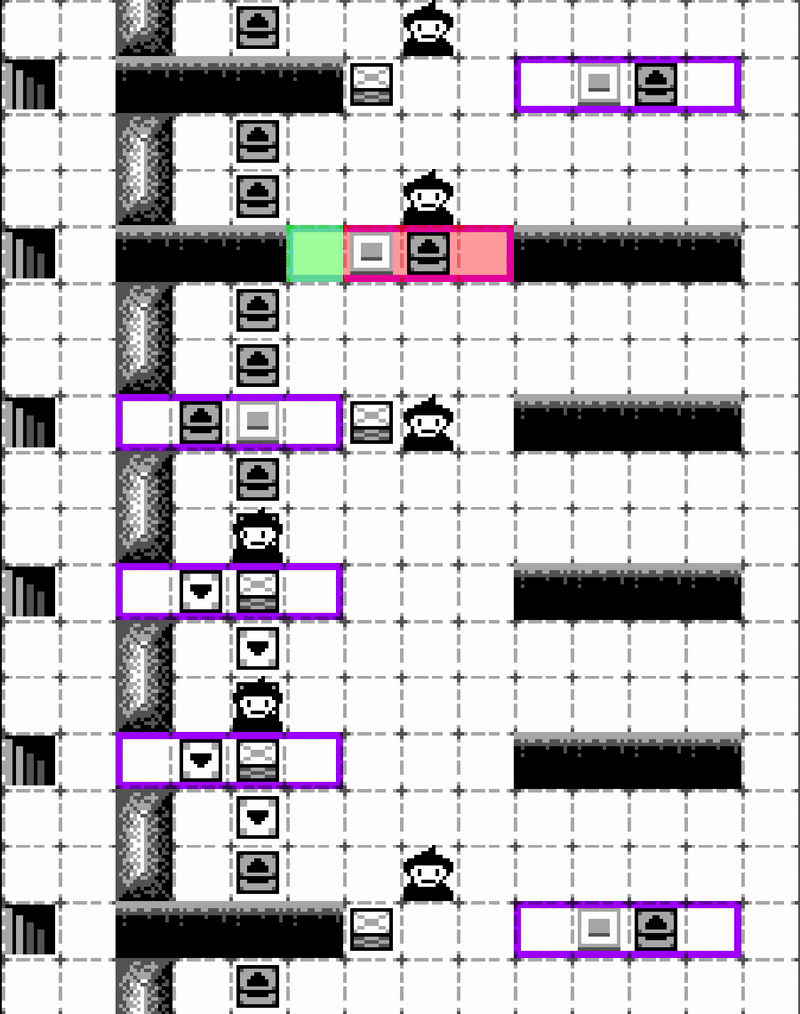
One of the two most complex tasks while developing Sokowand was the floor-ripping main mechanic. This mechanic would be broken up into three parts: allowing single tiles to be combined into one floor, ripping these tiles out of the floor and being able to place them back, and a tile validator, which allows tiles to be ripped out based on certain conditions. Single tiles would check for neighboring ones, change sprites based on them and act combined as a single floor. When a player tries to click on a floor to pick it up, all tiles check if an object lies on top of them. The pickup fails if any tile fails this check. The same check happens when the player tries to place them again. This time, the process works in reverse and verifies whether any object lies beneath the tile. This is handled via colliders and by comparing the rendering layers of the hit objects.
The most complicated part of this mechanic was enabling and disabling mechanics based on ripping out the floor tiles next to them. If a power source was ripped out, any objects neighboring it should turn off except objects still present on the ripped-out floor. This was executed through box casts and using multiple interfaces.
The other task was developing a step-tracking singleton, which keeps track of every single player input and level change. It would save the positions of game objects before an action happened, the action itself, game objects correlating and affected by it and the aftermath. The singleton could build a complete timeline from start to finish and can rewind the state of the level to any previous step. Implementing this and the corresponding interface was one of the most important steps for QoL purposes and player feedback, and it saved me from many headaches later on.
One of the two most complex tasks while developing Sokowand was the floor-ripping main mechanic. This mechanic would be broken up into three parts: allowing single tiles to be combined into one floor, ripping these tiles out of the floor and being able to place them back, and a tile validator, which allows tiles to be ripped out based on certain conditions. Single tiles would check for neighboring ones, change sprites based on them and act combined as a single floor. When a player tries to click on a floor to pick it up, all tiles check if an object lies on top of them. The pickup fails if any tile fails this check. The same check happens when the player tries to place them again. This time, the process works in reverse and verifies whether any object lies beneath the tile. This is handled via colliders and by comparing the rendering layers of the hit objects.
The most complicated part of this mechanic was enabling and disabling mechanics based on ripping out the floor tiles next to them. If a power source was ripped out, any objects neighboring it should turn off except objects still present on the ripped-out floor. This was executed through box casts and using multiple interfaces.
The other task was developing a step-tracking singleton, which keeps track of every single player input and level change. It would save the positions of game objects before an action happened, the action itself, game objects correlating and affected by it and the aftermath. The singleton could build a complete timeline from start to finish and can rewind the state of the level to any previous step. Implementing this and the corresponding interface was one of the most important steps for QoL purposes and player feedback, and it saved me from many headaches later on.
One of the two most complex tasks while developing Sokowand was the floor-ripping main mechanic. This mechanic would be broken up into three parts: allowing single tiles to be combined into one floor, ripping these tiles out of the floor and being able to place them back, and a tile validator, which allows tiles to be ripped out based on certain conditions. Single tiles would check for neighboring ones, change sprites based on them and act combined as a single floor. When a player tries to click on a floor to pick it up, all tiles check if an object lies on top of them. The pickup fails if any tile fails this check. The same check happens when the player tries to place them again. This time, the process works in reverse and verifies whether any object lies beneath the tile. This is handled via colliders and by comparing the rendering layers of the hit objects.
The most complicated part of this mechanic was enabling and disabling mechanics based on ripping out the floor tiles next to them. If a power source was ripped out, any objects neighboring it should turn off except objects still present on the ripped-out floor. This was executed through box casts and using multiple interfaces.
The other task was developing a step-tracking singleton, which keeps track of every single player input and level change. It would save the positions of game objects before an action happened, the action itself, game objects correlating and affected by it and the aftermath. The singleton could build a complete timeline from start to finish and can rewind the state of the level to any previous step. Implementing this and the corresponding interface was one of the most important steps for QoL purposes and player feedback, and it saved me from many headaches later on.
Challenges & Solutions
Challenges & Solutions
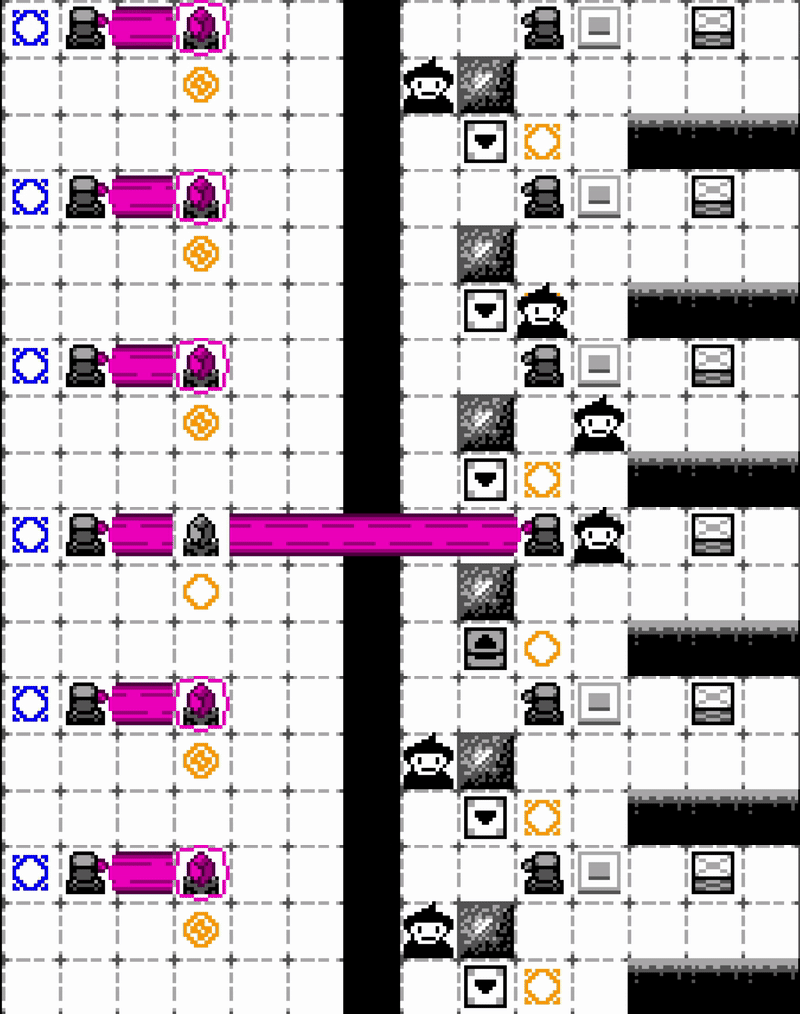
One of the biggest challenges while designing Sokowand was the puzzle design process itself. Coming up with interesting puzzles the player would enjoy solving was getting increasingly difficult and I didn’t want to create boring puzzles just so I could artificially inflate the level count. To counter this I used a trick from Mark Brown’s Game Maker’s Toolkit. I made a spreadsheet laying out how every mechanic in Sokowand would interact with each other and picked out the most interesting ones. This allowed me to look at my mechanics from another perspective and brought me ideas I never would’ve thought before. Approaching designing levels in this way helped me break out of creative blocks and ensured that every level as a unique interaction.
One of the biggest challenges while designing Sokowand was the puzzle design process itself. Coming up with interesting puzzles the player would enjoy solving was getting increasingly difficult and I didn’t want to create boring puzzles just so I could artificially inflate the level count. To counter this I used a trick from Mark Brown’s Game Maker’s Toolkit. I made a spreadsheet laying out how every mechanic in Sokowand would interact with each other and picked out the most interesting ones. This allowed me to look at my mechanics from another perspective and brought me ideas I never would’ve thought before. Approaching designing levels in this way helped me break out of creative blocks and ensured that every level as a unique interaction.
One of the biggest challenges while designing Sokowand was the puzzle design process itself. Coming up with interesting puzzles the player would enjoy solving was getting increasingly difficult and I didn’t want to create boring puzzles just so I could artificially inflate the level count. To counter this I used a trick from Mark Brown’s Game Maker’s Toolkit. I made a spreadsheet laying out how every mechanic in Sokowand would interact with each other and picked out the most interesting ones. This allowed me to look at my mechanics from another perspective and brought me ideas I never would’ve thought before. Approaching designing levels in this way helped me break out of creative blocks and ensured that every level as a unique interaction.